برلين
هنا ينتقل الباوهاوس إلى العالم. تصبح برلين مجالاً للتوتر: السياسة، الثقافة، الصناعة. تتشتت الطريقة وتتحول.

هنا ينتقل الباوهاوس إلى العالم. تصبح برلين مجالاً للتوتر: السياسة، الثقافة، الصناعة. تتشتت الطريقة وتتحول.
هنا يصبح الباوهاوس نظامًا. دساو تنظم الحياة: البناء، العيش، والعمل كهيكل مترابط واحد. تتخذ الطريقة شكلًا.
هنا يُبنى الباوهاوس. تصوغ ديساو المنهج: الهيكل، الحياة اليومية، العمارة كنظام متكامل. هنا يبدأ الباوهاوس.
تُظهر منازل المعلمين في ديساو الباوهاوس كواقع معاش — الهندسة المعمارية مبنية حول الحياة اليومية والعمل والممارسة الإبداعية.
اختر برنامجك وتواريخ السفر الخاصة بك. نحن نقوم بتنسيق الوصول والطرق والجداول عبر مواقع باوهاوس، مما يتيح تجربة مركزة تتسم بالهيكلية والوضوح والتنفيذ المهني.
DESIGN AS A SYSTEM
After Weimar’s experimental beginning, Dessau is the chapter of implementation: a school built as a machine for learning, housing built as an industrial process, and public architecture that turns method into everyday reality.
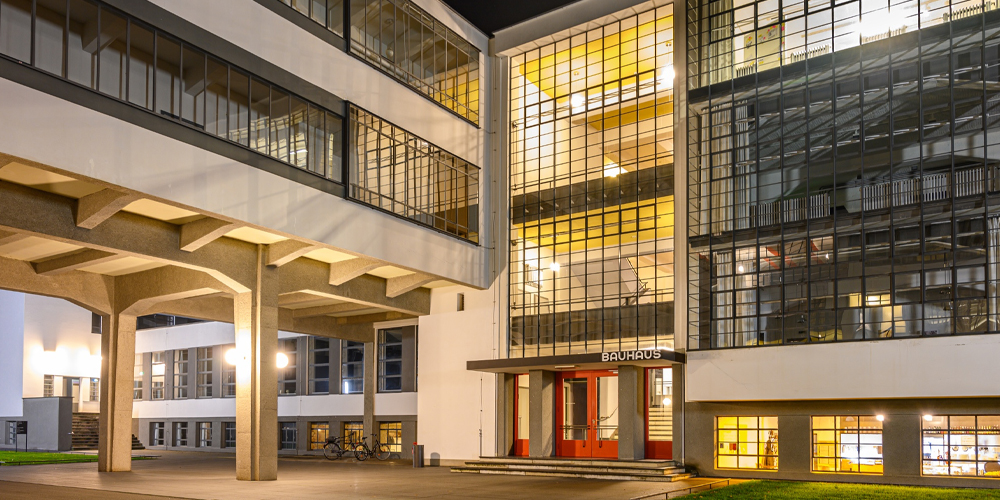
From idea to infrastructure
In Dessau, Bauhaus stops being a promise — and becomes a functioning model across school, housing and civic life.
Clear structure. Short reading. Optional depth.
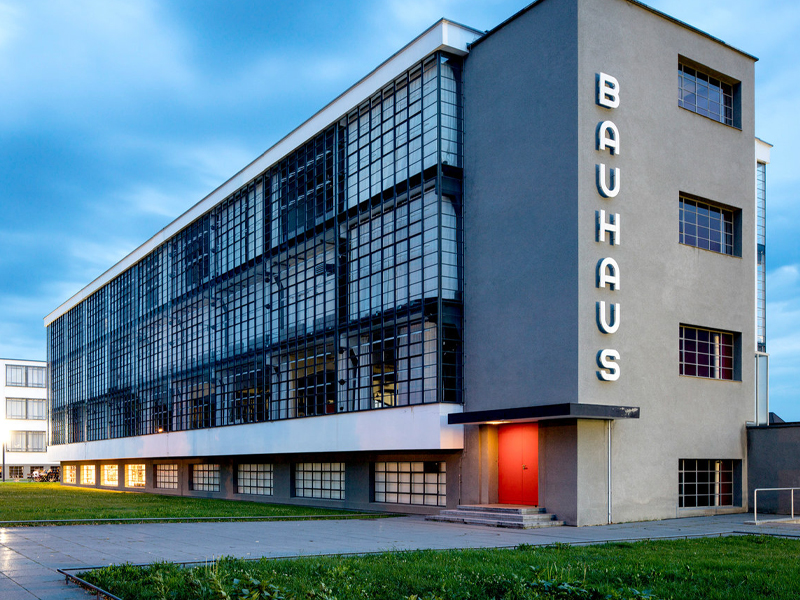
A built manifesto (1925–26): glass, concrete and circulation turned into an operating system for learning.
In Dessau, the school becomes architecture: workshops, studios and shared life organized for collaboration and production.
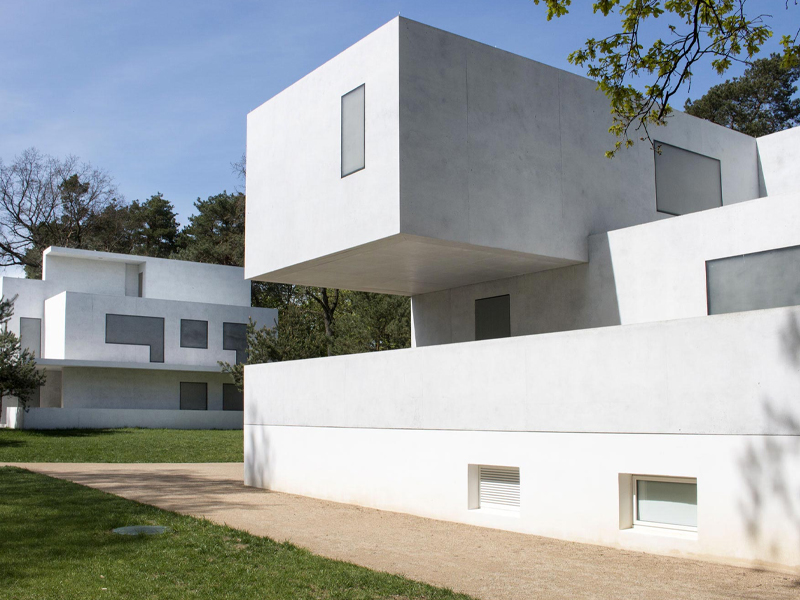
A cluster of living and working spaces (1926): private life, color, furniture and practice as one continuum.
Not villas, but prototypes of modern living: daily routines, interiors and artistic thinking aligned with Bauhaus method.
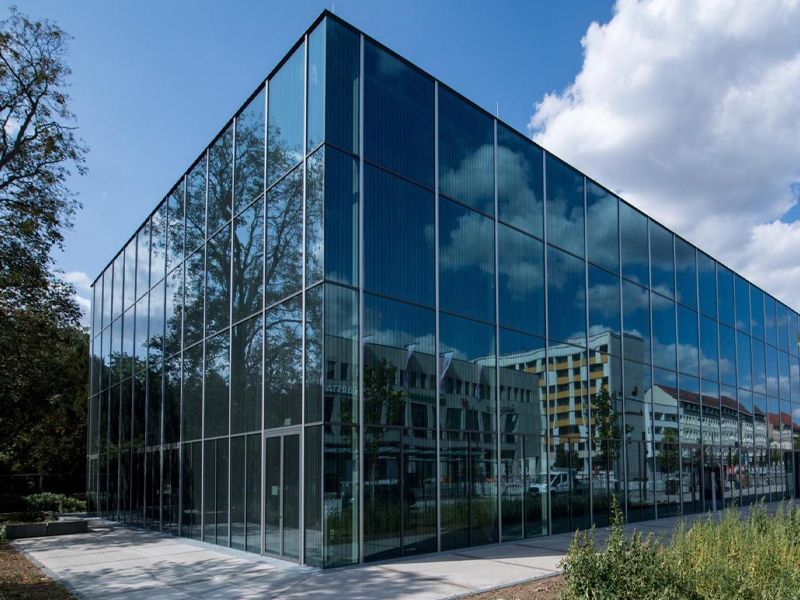
Bauhaus in the 21st century (opened 2019): collection, evidence, and reflection — method made legible through objects.
The Dessau chapter is read through originals: prototypes, documents and material culture that reveal how the system worked.
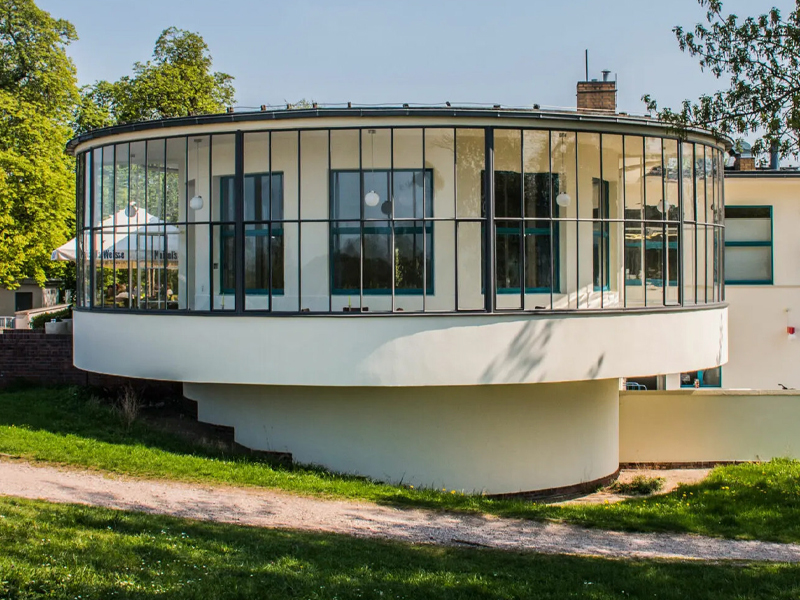
Functional architecture for public life (1930): an everyday place designed with Bauhaus clarity at the Elbe river.
Here, modern design is not a lecture — it is a social setting: terrace, rhythm, signage, and atmosphere for daily use.
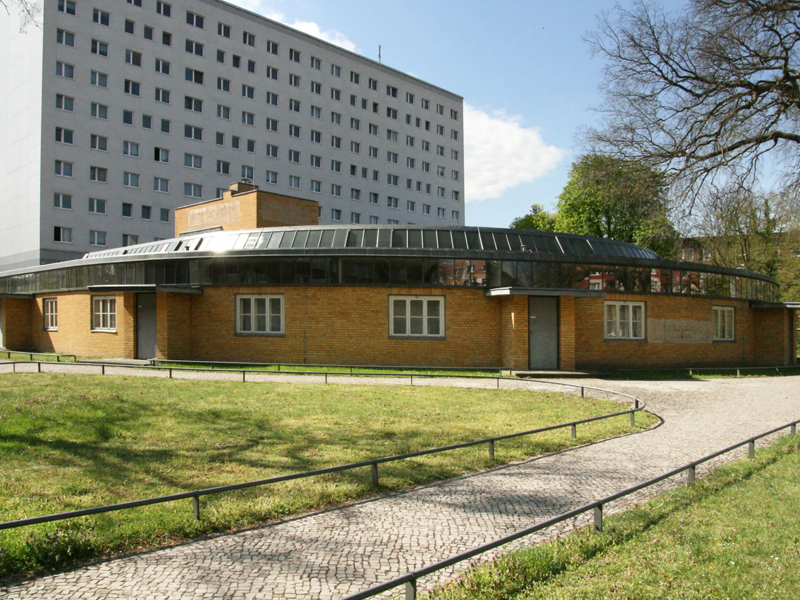
Architecture in public service (1928–29): rationalized movement and clarity of function for everyday administration.
A Bauhaus logic applied to the city: workflows, waiting, guidance — designed as a legible system rather than ornament.
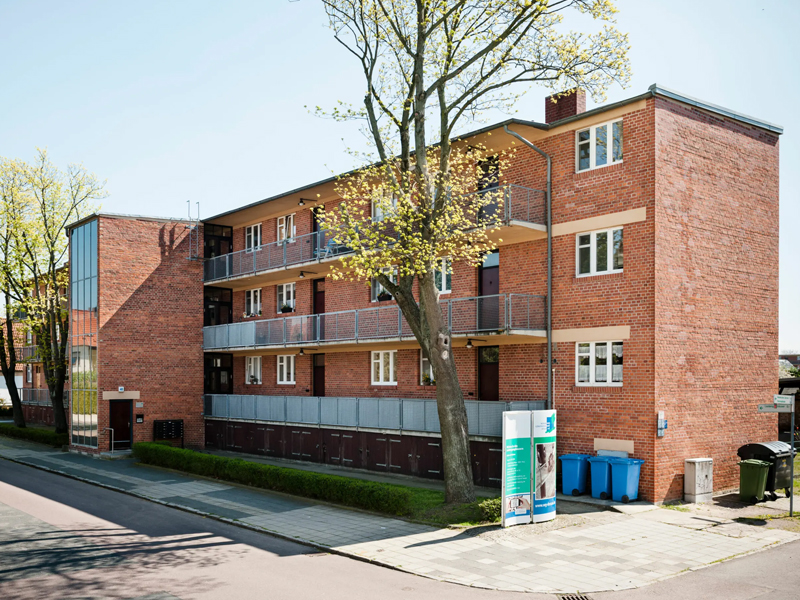
Social housing as system solution (1929–30): access galleries, repetition and economy — built for real need.
The shift is visible: from the single experiment to scalable housing logic — rational, collective and socially oriented.
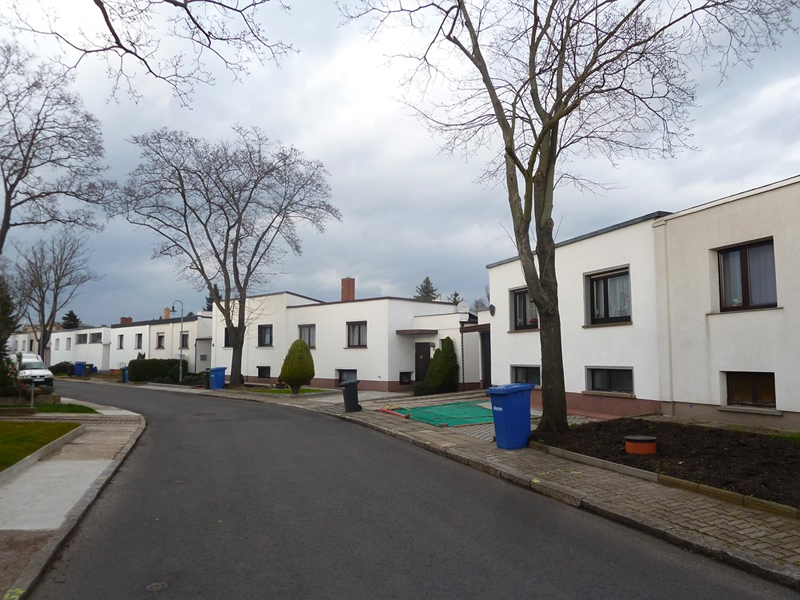
Industrialized housing construction (1926–28): standardized row houses as an experiment in affordability and production.
This is Bauhaus thinking at scale: modularity, speed and cost — housing as an industrial process with human consequences.
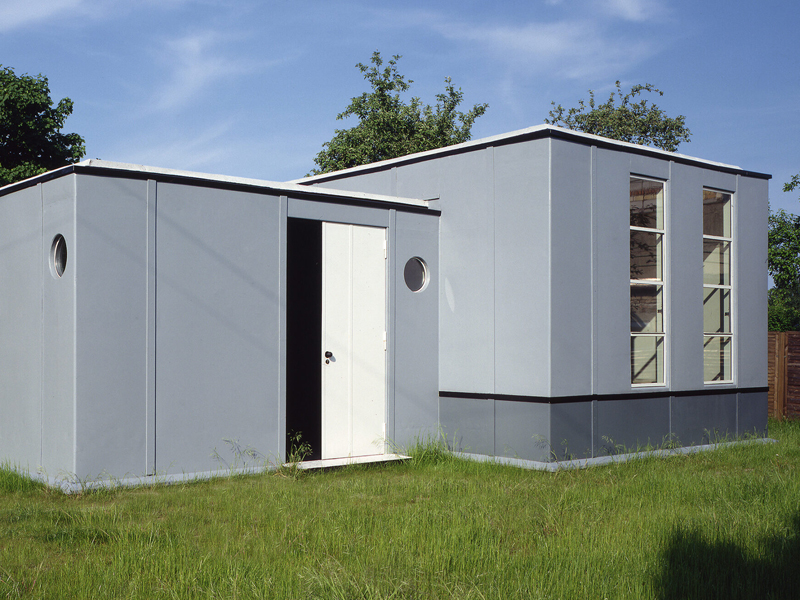
Material experiment & prefabrication (1926–27): a prototype exploring dry construction and industrial skin.
The ambition is clear: build faster, lighter, and with repeatable parts — a laboratory for modern production methods.
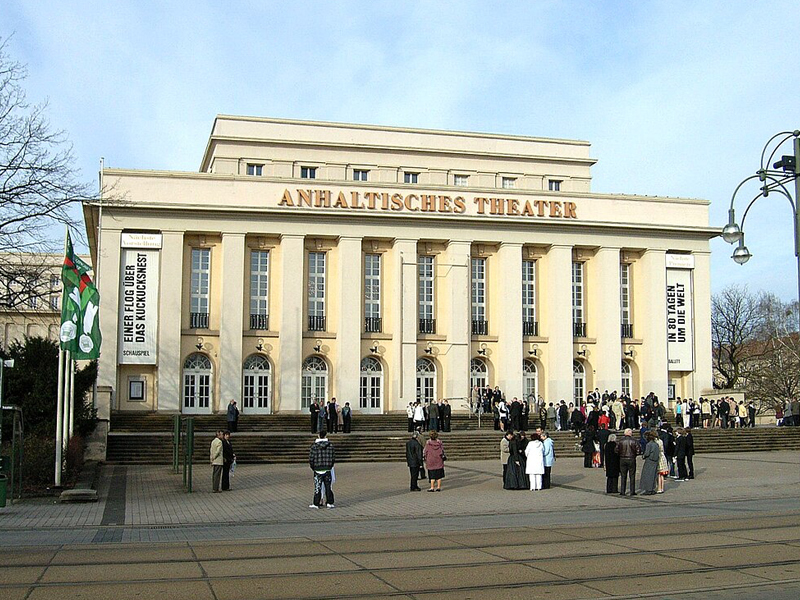
A multi-genre stage for the city: performance, music, and public culture as part of Dessau’s modern identity.
Dessau is not only buildings — it is a civic rhythm. Theater makes the social dimension visible: gathering, emotion, and form.
System · Space · Society
Dessau is the system chapter. The Journey connects the next layers — Berlin and further Bauhaus contexts — into one readable route with clear structure and depth where it matters.
View The JourneyJourneys · Group formats · Booking logic