
وصف
Runner 1922 – Gunta Stölzl
Hand-knotted · Hand-spun Ghazni wool · Design 1922 · Bauhaus Exhibition 1923
Runner 1922 translates Bauhaus thinking into textile: clear geometry, rhythmic order, material integrity. Gunta Stölzl – textile artist, Bauhaus member and first female master at the Bauhaus – designed the original in 1922 with the aim of serial production and presented it at the first Bauhaus exhibition in 1923.
Weaving as Method – not Decoration
At the Bauhaus, textiles were not an accessory. Surface, grid, material and repetition were understood as real tools to structure rooms, soften acoustics, create warmth and define transitions. Under Gunta Stölzl, weaving gained its own modern language: structure-driven, material-aware, production-minded.
Runner 1922 embodies this attitude. It does not “tell” – it organizes. Proportion, rhythm and surface logic create calm. This is Bauhaus DNA at its core: order without ornament, impact without gesture.
Craft faithful to the Original
Re-edition here does not mean copy, but precision: idea, scale and material are taken seriously. Especially in textile works, the surface is not “finish” – it is the actual statement.
Hand-spun Ghazni wool and the hand-knotted execution give the runner body, depth and a calm tactility that absorbs light and shadow. The surface appears clear – never sterile.
How the Runner Works in Space
- Linearity: As a runner, it structures paths, axes and transitions.
- Geometry: Clear forms create calm without feeling cold.
- Materiality: Wool adds warmth and tactile presence to reduced interiors.
- Rhythm: Repetition and cadence steady the gaze and quiet the surface.
What Makes this Runner Distinct
- Design 1922: conceived from Bauhaus serial logic.
- Workshop Impact: Stölzl made textile a key workshop of modern design.
- Surface as System: structure and proportion over pictorial narrative.
- Object + Space: textile architecture along the room axis.
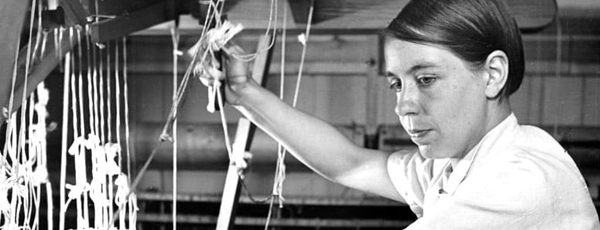
Gunta Stölzl – Bauhaus, Textile, System
Gunta Stölzl (1897–1983) was a Bauhaus member, textile artist and the first woman appointed master at the Bauhaus. Her significance lies in a methodological shift: textile became a modern discipline of surface – shaped by grid, weave structure, material knowledge and the question of how fabrics function in architecture and everyday life.


